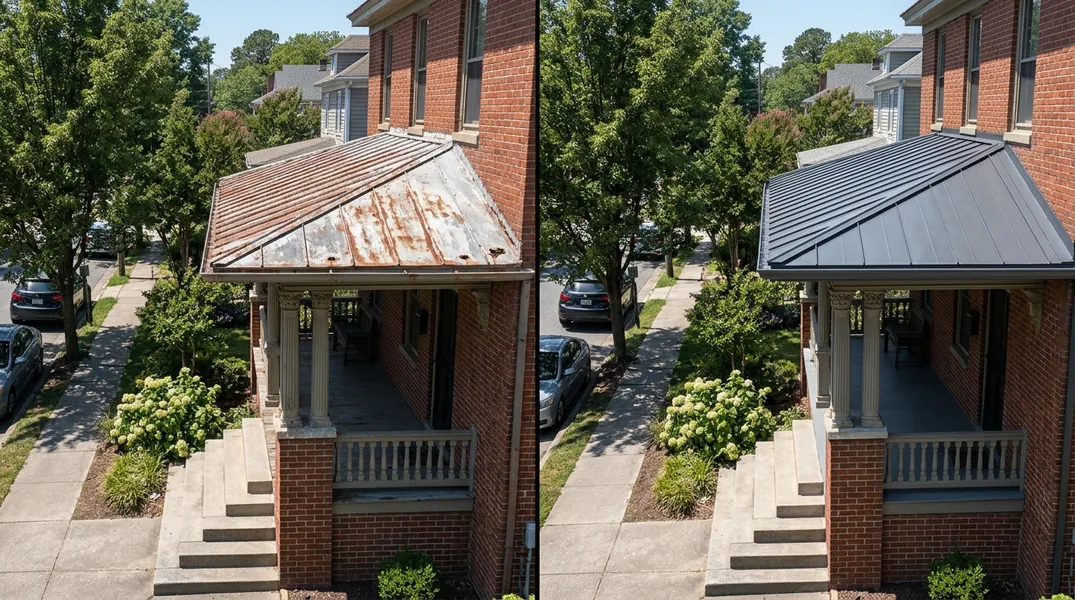
Why Salt Air Is Hard on Metal Roofs in Norfolk
Living near the Chesapeake Bay comes with beautiful views and a steady breeze, but that breeze carries salt. Salt air is one of the most aggressive natural enemies of metal roofing. When salt particles settle on a roof and combine with morning dew or coastal humidity, they create a mildly corrosive film that slowly attacks the protective coatings on metal panels. Over time, this can lead to chalky finishes, surface rust, and eventually pitting that compromises the roof's integrity.
In Norfolk, homes sit close to tidal water, and the combination of salt spray, high humidity, and frequent storms means your roof faces more corrosion pressure than a roof in a dry inland city. That is why the metal you choose matters far more here than it would in Richmond or Roanoke. A panel that performs well for 40 years in a dry climate might show early corrosion near the bay if it is the wrong alloy or has a thin coating. Understanding metal roof corrosion is the first step toward protecting your home.
Galvalume vs Aluminum Roof: Which Handles Coastal Conditions Better?
The galvalume vs aluminum roof debate is central to coastal roofing in Norfolk. Galvalume is steel coated with an aluminum-zinc alloy. It is strong, affordable, and performs well in most climates, but its cut edges and scratch points can be vulnerable to rust in salt-heavy air. If water sits on exposed steel edges, corrosion can start there and spread. Galvalume can work near the coast when it is installed with care and kept well maintained, but it is not the most forgiving option for a home within a few miles of the water.
An aluminum metal roof coastal homeowners choose for durability is often the better fit. Aluminum naturally forms a thin oxide layer that protects it from salt, and it does not rust the way steel does. It is lighter, highly resistant to salt spray, and ideal for homes in Virginia Beach and other bay-adjacent communities. The tradeoff is that aluminum usually costs more upfront and is softer than steel, so it needs proper installation over solid decking. For many coastal properties, though, the long-term resistance is worth it. A professional Metal Roof Installation team can help you weigh both materials against your budget and exposure level.
Coatings, Fasteners, and Details That Prevent Metal Roof Corrosion
The metal panel itself is only part of the story. Coatings and fasteners often determine how long a roof lasts near the bay. A high-quality paint system such as a PVDF (polyvinylidene fluoride) finish resists fading, chalking, and salt attack far better than a basic polyester coating. For coastal homes, it is worth asking about the coating warranty and the salt-spray rating before you commit. Skipping this step can mean a roof that looks tired in 10 years instead of 30.
Fasteners and flashing deserve equal attention. Mixing dissimilar metals, such as steel screws on an aluminum panel, can trigger galvanic corrosion, especially in wet, salty air. Stainless steel or appropriately matched fasteners and sealants are essential. So is proper detailing around valleys, chimneys, and roof penetrations, where water and salt tend to collect. Whether you choose Standing Seam Metal Roofing or another panel style, concealed fasteners and careful workmanship reduce the number of places corrosion can start. Homeowners in Chesapeake and Portsmouth face similar conditions, so the same detailing rules apply across the region.
Metal Roof Replacement Near Me: When to Call a Pro
If your current roof is showing rust streaks, bubbling paint, or granules in the gutters, it may be time for a Metal Roof Replacement. Coastal roofs age differently than inland roofs, and small corrosion spots can spread quickly once salt and moisture get under a coating. A professional inspection can tell you whether a repair will buy you a few more years or whether replacement is the smarter investment. Waiting too long often means hidden damage to decking and fasteners, which raises the final bill.
Some homeowners ask whether they can install metal over an existing shingle roof. In many cases, a Metal Roof Over Shingles (Retrofit) is possible and can save on tear-off costs, but coastal homes need extra attention to ventilation and moisture control. A local installer who understands bay-area conditions can confirm whether your roof structure is a good candidate. If you are searching for metal roof replacement near me in Norfolk, call Norfolk Metal Roofing at (757) 796-6867 to schedule an assessment.
Metal Roof Installation Cost in Norfolk: What to Budget
Homeowners often want a clear number before they choose a material. Metal roof installation pricing in Norfolk depends on roof size, pitch, complexity, panel type, and whether old roofing must be removed. Aluminum typically costs more per square than Galvalume because of the raw material and coastal demand, but it can reduce long-term maintenance. A simple ranch home will cost less than a steep, multi-gable roof with dormers and skylights.
Rather than shopping on price alone, compare the full package: panel gauge, coating type, fastener quality, warranty terms, and installation details. A cheap quote that uses thin coatings or mismatched fasteners may cost more over 20 years than a slightly higher quote built for salt air. Ask for a written scope and a clear explanation of the materials. To get a realistic figure for your home, request a free estimate from Norfolk Metal Roofing and review the options side by side before you decide.
Looking for a professional metal roofing contractor in Norfolk? Norfolk Metal Roofing responds fast for all your metal roofing needs.
Get a Free QuoteOur services: Metal Roof Installation · Standing Seam Metal Roofing · Metal Roof Replacement